Cutting Flowing Water Cost
October 14, 2026 • Provincia Dev Team
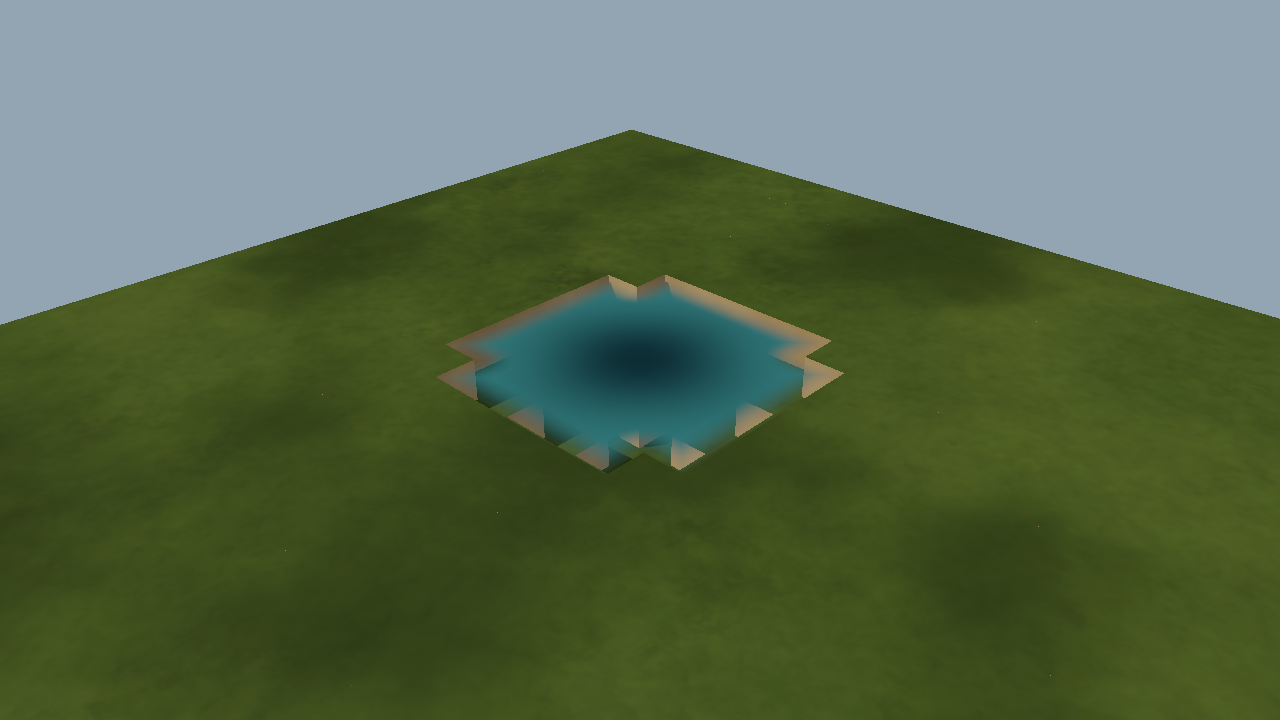
Flowing lakes were still expensive for a boring reason. The native CA kernel finishes in about half a millisecond. GDScript around it was the bill: when one wet cell dried, the next ensure rescanned all forty thousand cells — twice per step. Depths were fine; the frame hitch was not.
Local presence, same rule
Clearing a wet-list cell now refreshes only that chunk and its cardinal neighbors. The presence rule is unchanged: a chunk stays active when it has water, an emitter, or sits in the one-cell halo of either. Region indices rebuild only when a presence bit actually flips. On the flowing-lake bench, full-grid presence rebuilds drop to setup only — not once per step.
Fewer copies on the hot path
Presence rebuilds and region index builds no longer grow arrays with per-cell _sim.get(...).append. Chunk lists and cell indices are sized once, filled locally, then written back. Quiet/border passes bind depth, solid, and terrain once for the pass instead of re-fetching ~160 KB grids inside every probe. Idle world LOD also skips classification when the camera has not moved and nothing is queued.
What the numbers say
Harness: headless bench_flowing_step, resident native on, depth hash unchanged.
| Scenario | Before this ship | After local presence |
|---|---|---|
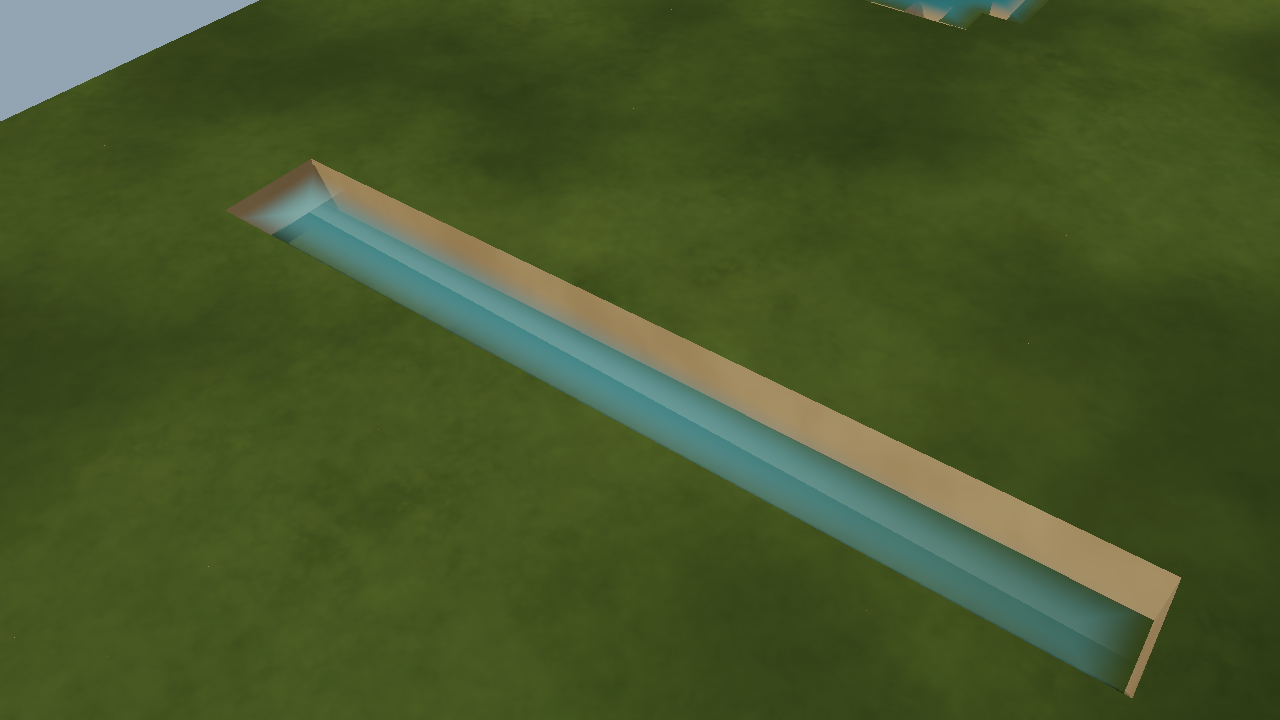
| Narrow trench (~105 active) | ~1.05 ms | ~0.77 ms |
| 64×64 flowing lake (~3900 active) | ~20.5 ms | ~11.8 ms |
That is roughly half the script cost on a big wet set, not a 100× cut. Remaining time is still GDScript walking the live wet set for motion samples, quiet-chunk metering, and the depth push. The water looks and fills the same.
What to feel in a build
- Fill a large pond or lake and leave sim running — flowing steps should hitch less than before.
- Dig or drain edges so cells dry while neighbors stay wet — water should keep moving without a full-map stutter.
- Orbit a steady camera over wet ground — LOD classification should stay quiet until you move again.